

Table of contents(14)+
- 01The 30-second test
- 02Method 1: Program with your TV's brand code
- 03Method 2: Run an auto-search code scan
- 04Method 3: Use your phone as a universal remote
- 05Method 4: Teach the remote with learning mode
- 06Universal remote options compared
- 07Frequently Asked Questions
- 08How do I program a universal remote without the codes?
- 09Can a universal remote control any TV?
- 10Why does my universal remote control power but not volume?
- 11Do I need line of sight for a universal remote?
- 12Can I use my phone as a universal remote control?
- 13Are universal remote codes the same for every brand?
- 14Related guides
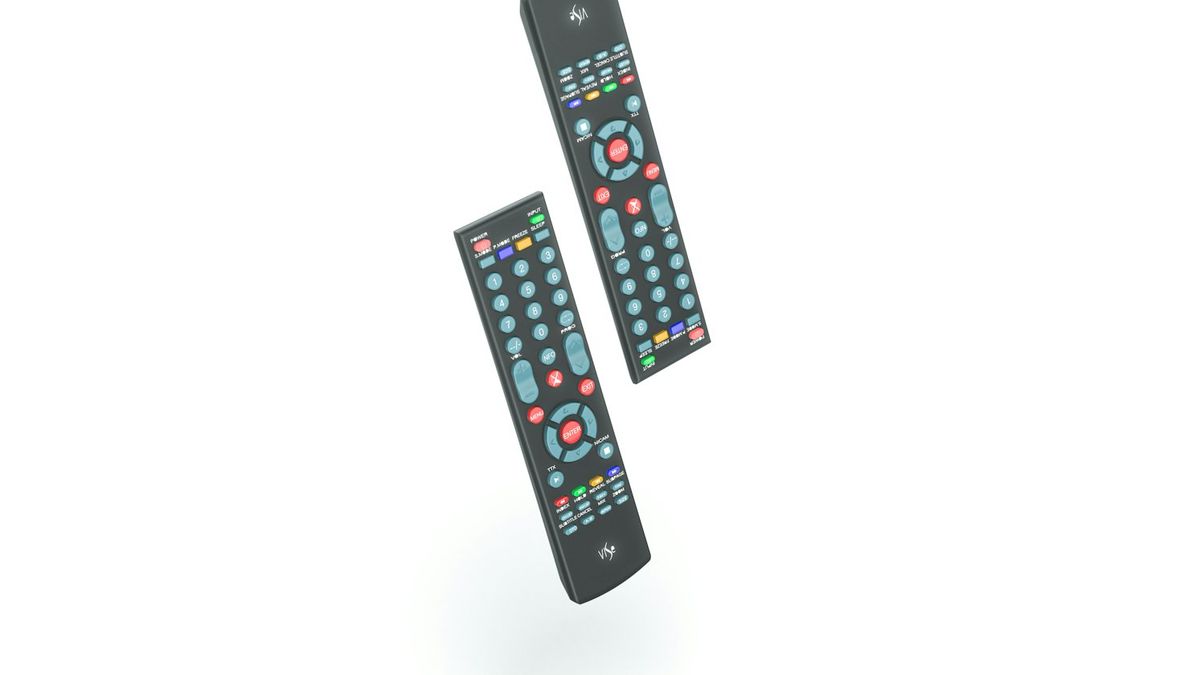
A universal remote control is one remote that runs several devices by sending each one its correct infrared code. To set it up, put the remote in programming mode, enter your TV's brand code, then test power and volume. No code? Run the auto-search scan, which cycles codes until the TV responds.
I keep a GE 6-device remote and a One For All Essence in a drawer, and I've programmed both for a Hisense A6 and an old Roku Express. The code method works about nine times out of ten. When one code handled power but not volume, the auto-search scan fixed it. Here's the exact process I use, plus the free phone route when the TV is smart.
The 30-second test
Before you buy anything, answer one question: is your TV a smart TV connected to Wi-Fi? Your answer decides the fastest path.
- Yes, a smart TV on Wi-Fi — your phone can be the remote for free, with no codes and no IR.
- No, an older IR-only set — you need a physical universal remote and a brand code.
- Mixed (TV + soundbar + old player) — a physical universal remote runs all of them from one hand.
French and Romanian readers can run through this same decision in our French remote app guide or the Romanian universal remote guide.
If your Hisense TV is on Wi-Fi, the HiRemote app turns your phone into a full remote in under a minute — power, volume, apps, and a keyboard for typing. It skips codes entirely. Prefer not to install anything? Open the online Roku remote (no app) and control the TV from any phone browser.
Method 1: Program with your TV's brand code
This is the fastest way when you know the brand. Every universal remote ships with a code booklet, and the codes are online too.
- Find your brand's code list. Use the booklet or a maker's finder, like GE/Jasco or One For All.
- Press and hold the Setup button until the red LED stays lit.
- Press the device button you want, usually TV.
- Type the 3, 4, or 5-digit code. The LED blinks when it's accepted.
- Point the remote at the TV and press Power. If the TV turns off, you're done.
When it won't work: some brands list a dozen codes. If the first only handles power, try the next code on the list until volume and menu respond. Hisense owners can pull codes from our universal remote codes for Hisense TV guide. If you prefer to follow this in Spanish, our guide to setting up a universal remote for TVs of any brand walks through the same brand-code method. Polish speakers can find the same Hisense code list in our Polish-language guide to Hisense remote codes, and the Italian version covers the identical set.
Method 2: Run an auto-search code scan
Use this when the code list fails or you don't know the brand. The remote steps through its stored codes until one works.
- Turn the TV on manually.
- Hold Setup until the LED stays lit, then press TV.
- Point at the TV and press Power repeatedly, one press at a time.
- The remote sends one code per press. Stop the instant the TV switches off.
- Press Setup once to lock that code in.
Heads-up: a full scan can take several minutes because it walks the entire code library. Go slowly so you don't blow past the right code. If you overshoot, you'll have to start the scan over.
Method 3: Use your phone as a universal remote
Modern smart TVs don't need IR at all. If your TV is on Wi-Fi, your phone controls it over the network — no line of sight, no codes.
For a Hisense TV, the HiRemote app is the direct route. It supports VIDAA, Google TV, and Roku-based Hisense sets.
- Put your phone and TV on the same Wi-Fi network.
- Install HiRemote and open it.
- Pick your TV from the list it finds.
- Approve the on-screen pairing code on the TV if it asks.
- Use the D-pad, volume, and keyboard right from your phone.
The honest limit: a phone app only controls smart TVs on your network. It can't run an old IR-only TV, a soundbar without Wi-Fi, or a garage door. Most phones dropped their IR blaster years ago, so this path is Wi-Fi only. For those devices, a physical universal remote still wins.
For Spanish speakers chasing a free option, our Spanish guide to free universal remote control apps covers the same no-cost phone route.
Want the full cross-brand picture? See our universal TV remote app guide.
Not sure your phone will connect? HiRemote auto-detects Hisense TVs on your Wi-Fi, and if you'd rather test before installing, the Roku remote in your browser runs in any phone browser. Both are free to try, so you can rule the phone route in or out before buying hardware.
Method 4: Teach the remote with learning mode
Some universal remotes, called learning remotes, copy signals straight from your original remote. This helps when no single code covers every button.
- Line up the two remotes head to head, a couple of inches apart.
- Hold Setup on the universal remote until the LED lights.
- Press the button you want to teach, say Volume Up.
- Press and hold the same button on the original remote until the LED confirms.
- Repeat for each button, then save.
When it won't work: learning needs a working original remote. If yours is lost, this method is out — use a code or the phone app instead. If your original Hisense remote is missing, our program a Hisense remote guide covers every path. Spanish-speaking Hisense owners can follow the same steps in our Spanish guide to setting up a Hisense remote.
Universal remote options compared
| Option | Runs IR-only devices | Needs Wi-Fi | Multiple devices | Works if original lost | Typical cost |
|---|---|---|---|---|---|
| Physical universal remote | Yes | No | Yes (4–8) | Yes | $10–$30 |
| Phone app (HiRemote) | No | Yes | Smart TV only | Yes | Free |
| Learning remote | Yes | No | Yes | No (needs original) | $15–$40 |
| Original OEM remote | Yes | No | One device | No | $10–$25 |
Frequently Asked Questions
How do I program a universal remote without the codes?
Use the auto-search scan. Hold Setup until the LED stays lit, press the device button, then tap Power repeatedly while pointing at the TV. The remote sends one code per press and stops when the TV turns off. Lock it in with Setup. It's slower than a code but needs no lookup.
Can a universal remote control any TV?
Almost any TV, but not literally every one. Universal remotes carry code libraries for major brands like Samsung, LG, Sony, TCL, and Hisense. Very old or obscure sets may be missing. For a smart TV on Wi-Fi, a phone app is often a surer bet than an IR code.
Why does my universal remote control power but not volume?
You entered a partial-match code. Many brands list several codes, and the first often covers power only. Try the next code on your brand's list until volume, channel, and menu all respond. If none is perfect, switch to a learning remote or a phone app.
Do I need line of sight for a universal remote?
Yes, for infrared remotes. IR needs a clear path to the TV's sensor, so furniture or a cabinet door blocks it. Wi-Fi phone apps don't — they work from another room. That's one reason many people move to a phone remote for smart TVs.
Can I use my phone as a universal remote control?
Yes, if your TV is a smart TV on Wi-Fi. Apps like HiRemote control Hisense TVs over the network, with no IR blaster needed. Older IR-only TVs won't respond, since most phones no longer include an infrared emitter. Check your TV type first with the 30-second test above.
Are universal remote codes the same for every brand?
No. Each TV brand has its own set of 3, 4, or 5-digit codes, and they differ by remote maker too. A GE remote and a One For All remote use different code books. Always match the code to both your TV brand and your remote model.
This same walkthrough is also available in Spanish as our full Spanish guide, or in a shorter form at our quick Spanish version.